Post-Concussion Treatment in Auckland
Some concussions clear on their own in a few weeks. Others don't. If the headaches keep circling back, the fog won't lift, and you're tired in a way sleep doesn't touch months on, that's post-concussion syndrome, and it's the situation hyperbaric oxygen therapy was built for. Sessions run 1 hour 40 minutes and involve nothing invasive.
Why Choose Us For Concussion
Kick-Starts Repair That Stopped Halfway
Oxygen reaches brain tissue that weak circulation has kept starved, restarting healing that stalled after your injury, whether that was months or years ago.
Grounded in a Controlled Trial
These protocols aren't a hunch. A randomised controlled trial in PLOS ONE found HBOT produced measurable brain improvement in prolonged post-concussion cases.
Sits Alongside Your Existing Care
HBOT adds to what your GP, physio, or neuropsychologist is doing. No injections, no procedures, and a technician monitors every session.
A Straight Timeline For Your Case
Most people run five sessions a week and start noticing change around weeks three to four. We give you an honest read for your injury, not a stock figure.
A concussion isn’t only bruising. It disrupts the small vessels that feed the injured area, and that’s where recovery can quietly come off the rails.
Why Some Concussions Never Finish Healing
When you’re first hurt, the brain swells, the acute phase runs its course, and for most people things settle. But if blood flow to the damaged region stays poor afterwards, repair runs out of fuel and stops partway. The brain keeps trying. It just can’t finish the job without a steady oxygen supply.
That’s the mechanism behind post-concussion syndrome dragging on for months, sometimes years. The symptoms aren’t in your head in the dismissive sense. They come from real tissue that never got the conditions it needed to close the loop. Rest was useful early on. At some point it stopped doing anything, and that plateau is precisely where we come in.
Reaching Tissue That Rest Can’t
Oxygen normally travels bound to red blood cells. Where circulation is compromised, those cells can’t get through, and the tissue downstream stays short.
In the chamber, pressure climbs to roughly two atmospheres, and at that point oxygen dissolves directly into your blood plasma instead of relying on red cells alone. Plasma moves into the places blocked circulation had cut off. For a post-concussion brain, that restored supply is the trigger the body needs to grow new vessels, calm inflammation, and pick repair back up where it stalled.
What A Session Feels Like
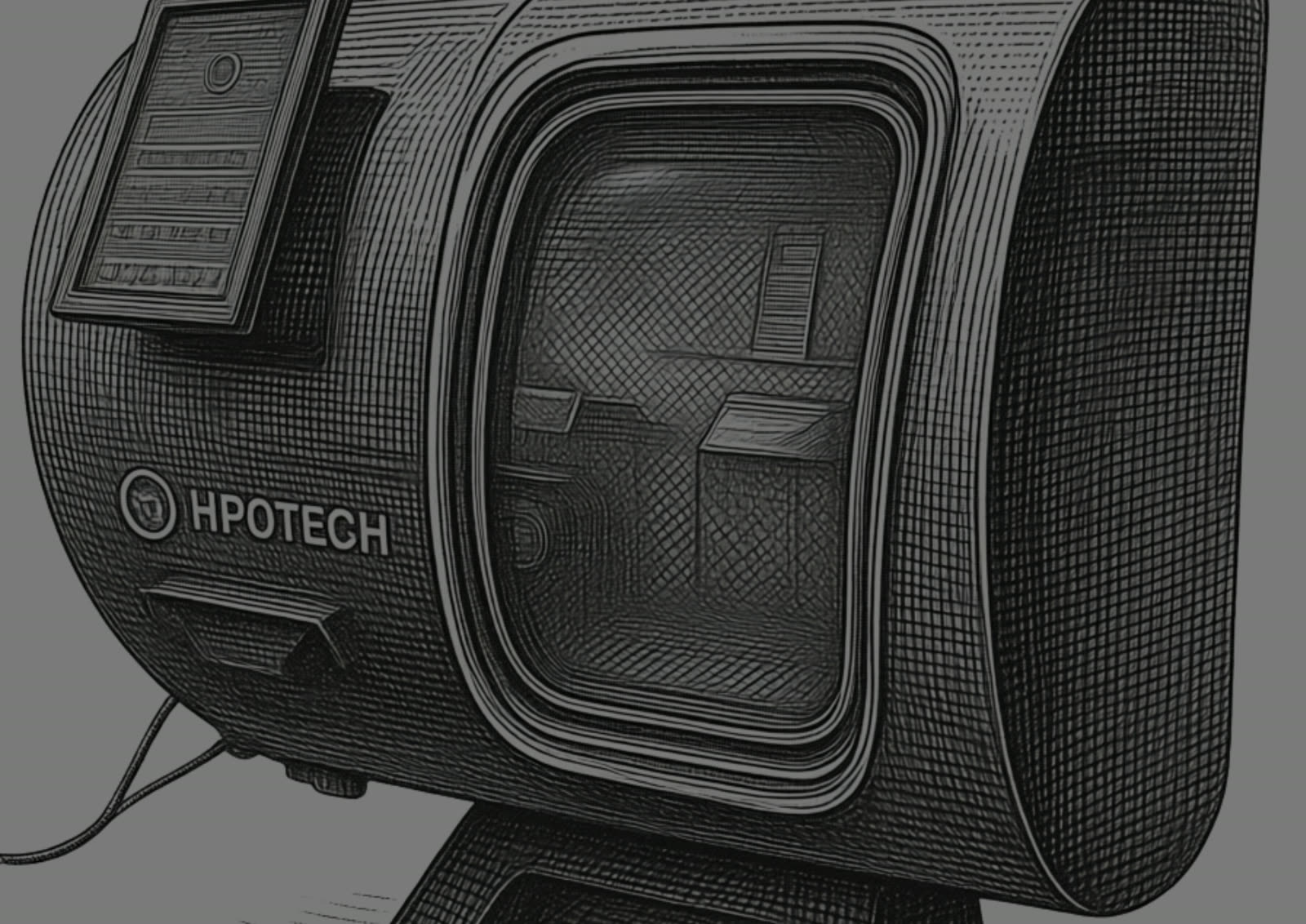
You settle into a clear acrylic chamber, put on an oxygen mask, and the pressure builds gently over ten to fifteen minutes, a bit like a plane climbing. Most people stop noticing it after the first visit. From there you read, listen to something, or doze for the rest of the 1 hour 40.
The early signs are often small. Sleep improves. Mornings feel a shade clearer. Weeks three and four tend to be when the steadier gains show up: concentration holding longer, headaches easing off, the fog breaking for real stretches of the day. Some people move faster, some slower, depending on how long symptoms have been around and the nature of the original hit.
It’s Not Too Late Years On
We’ve worked with people carrying symptoms for one year, two, sometimes longer. The brain’s ability to respond to restored oxygen doesn’t switch off with time. What it needs is the right environment, and that’s what a proper course provides.
What The Research Actually Says
Post-concussion HBOT is one of the better-studied uses of hyperbaric therapy. The randomised controlled trial published in PLOS ONE is the one worth knowing about: it found HBOT drove neuroplasticity and measurable improvement in brain function in mild TBI patients with lasting post-concussion syndrome, including people well out from their original injury. That last detail matters, because the study wasn’t run on fresh cases. It was run on people who’d been waiting a long time.
We don’t wave research around to make promises. We mention it because you deserve to know the reasoning behind what you’d be doing.
- Reaches injured brain tissue that rest and circulation can’t
- Non-invasive, with no injections or procedures
- Draws on years of post-concussion work in Auckland
- Supported by a randomised controlled trial in PLOS ONE
- Runs alongside your GP, physio, or neuropsychologist
Please Note
Information on this site is for general educational purposes and is not medical advice. Hyperbaric oxygen therapy and red light therapy are complementary wellness services and are not a substitute for professional medical care. Always consult a qualified health practitioner.
Questions, Answered
How soon after a concussion can I begin?
Once the acute stage has passed and your GP is comfortable with you exploring other options. Most people who come to us have been living with symptoms for months, so there's no real upper limit on timing. Call and we'll talk it through for your case.
How many sessions does it take?
Post-concussion patients usually do five a week over several weeks, with the clearer gains tending to land around weeks three and four. We'll give you a specific expectation once we understand your history, not a generic number.
Can I keep seeing my physio or specialist at the same time?
Yes, and we'd encourage it. HBOT is meant to complement existing care, not replace it. Tell us who else you're working with so we've got the full picture.
Is it safe on a brain that's already been injured?
Yes. It's non-invasive, with no injections or procedures, and you're monitored throughout. The pressure sits around shallow-diving depths, and our protocols have been refined over thousands of sessions.
Ready To Get Started?
Book your session at our Epsom clinic, or get in touch with any questions. We'll give you a straight answer.